
One butcher, one head of cattle
The Hirai family opened a butcher shop in Shikata, Kakogawa, in 1968. When the second generation wanted to judge beef by its flavour as well as its marbling, they began by raising a single animal.
Read the story →Thirty stories from a family butcher in Hyogo. Follow the cattle through the seasons, learn how Kobe beef earns its name, and meet the cuts you can order in Kaminoge.
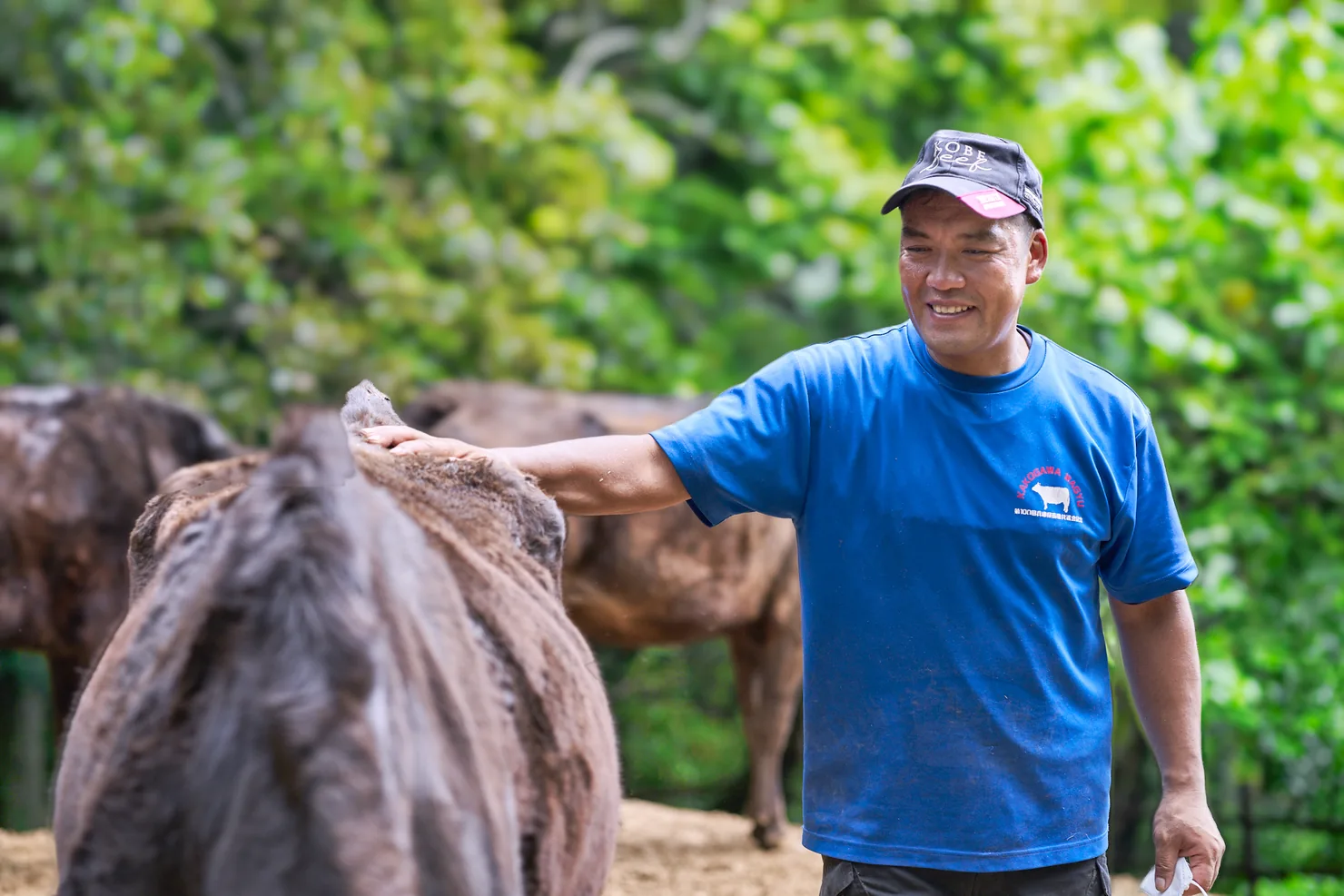
The Hirai family opened a butcher shop in Shikata, Kakogawa, in 1968. When the second generation wanted to judge beef by its flavour as well as its marbling, they began by raising a single animal.
Read the story →At Nanatsuike in Kakogawa, the photographs show breeding cows out on the grass. The barns across the lotus pond at Kasai are where cattle are raised for beef. The two landscapes show different stages in an animal’s life.
Read the story →Hirai’s feed mix brings together soybean meal, wheat bran and rice bran. The long straw in the next photograph serves another purpose. Microbes in the rumen help cattle make use of fibre.
Read the story →The morning and afternoon feeds give the farm manager two chances to see each animal eat. Knowing how a particular cow usually approaches its feed makes a small change in appetite or behaviour easier to spot.
Read the story →Hirai aims to raise its Tajima cattle to 30–32 months of age, counting from birth. This describes time spent growing; the ageing of a cut of beef starts on a different clock.
Read the story →Yuichiro Hirai chose the butcher’s counter, while his younger brother Daisuke took charge of the farm. One sees how customers buy, cook and describe a cut; the other knows the cattle long before they reach the shop.
Read the story →A calf reaching for a bottle tells a different story from an adult chewing straw. Early on, milk nourishes the calf while its digestive system develops. Only gradually can it make full use of grass.
Read the story →Compare a lean slice with a marbled one. Notice the aroma as each comes off the grill, then the resistance of the first bite and the flavour that lingers. You may prefer a different cut than you expected from its appearance.
Read the story →The cattle raised on Hirai’s farms are Tajima cattle. Only eligible Tajima beef meeting the additional carcass standards earns the Kobe designation. A calf’s birthplace alone cannot determine what name will appear on the menu.
Read the story →The assessment looks at carcass weight, yield, meat quality and marbling, alongside the animal’s background. A4, A5, B4 and B5 can all be eligible; the grade alone does not confer the Kobe name.
Read the story →The letter estimates the yield of saleable cuts from the carcass; the number grades meat quality on four criteria. B5 and A5 share the same quality grade, even though their yield grades differ.
Read the story →Marbling is fat within the muscle. The Japanese BMS scale compares it against twelve reference grades on a specified cross-section. A photo of a slice can show a pattern, but it cannot tell you the official score.
Read the story →The Kobe beef certificate is issued for an individual animal that qualifies. The bronze figure identifies a designated establishment; the ten-digit cattle ID traces the animal’s history. Each answers a different question about the beef in front of you.
Read the story →Kobe opened its port in 1868, bringing foreign residents and a new market for beef. The article separates the often-told tale of a British diner from documented changes in the port city’s restaurants.
Read the story →In Mikata, Hyogo, people kept records linking calves to their parents across generations. The ledgers preserve the lineages of animals that once worked the rice fields, including the story of the influential sire Tajiri.
Read the story →Read a dish name in layers. Kobe beef tells you the designation, akami points to lean meat, and usugiri means thinly sliced. Knowing which sort of word you are looking at helps you compare two similar orders.
Read the story →The farm’s harami is diaphragm, a muscle used in breathing. On this menu, Kobe beef uchi-harami is a butcher’s cut from the inside of the belly section. Ordering both lets you compare two distinct textures behind similar names.
Read the story →A thinner slice gives a quick, crisp bite, while thick-cut tongue offers more spring as you chew. Try the regular and thick-cut versions side by side and notice how long each bite holds its texture.
Read the story →Karubi takes its name from the rib area, while akami describes lean meat and can come from several parts of the animal. Compare similarly thick slices to taste the difference between layers of fat and the flavour of lean muscle.
Read the story →Rump runs from the loin towards the rear and is prized for its lean flavour. Ichibo, the rump cap near the tip of the rump, can carry more marbling. They make a revealing pair if you like lean beef but enjoy a little richness.
Read the story →White lines may be fat threaded through the muscle or connective tissue that holds bundles of fibres together. They feel different when cooked. The test is what happens as you chew, rather than how white the slice looks.
Read the story →Bone, muscle and connective tissue all go into the pot with the tail. At Kaminoge you can choose between oxtail soup on its own, ramen, or rice with a thickened ginger and oxtail sauce.
Read the story →Mino comes from the first of a cow’s four stomach compartments. Senmai comes from the third, with its distinctive leaf-like folds, and akasen from the fourth. The names help you choose among very different textures on the offal menu.
Read the story →The browning surface, warming fat and any sauce touching the grill all contribute to the first aroma. There is a second chance to notice it when you chew and aromas travel from your mouth to your nose.
Read the story →Keep the raw-meat plate and tongs on one side, with clean plates and eating chopsticks on the other. Lift cooked meat with clean utensils so raw juices also stay away from ready-to-eat lettuce and side dishes.
Read the story →A cook from Hamhung on the Korean peninsula brought memories of cold noodles to Morioka in northern Japan. Their springy, pressed noodles and cold broth became a local speciality, and make a refreshing finish after grilled beef.
Read the story →Seasoning on the meat before grilling changes with the heat. Sauce added afterwards reaches your tongue first. Try a bite before dipping, then another with a little tare to taste what the sauce adds.
Read the story →Order karubi and lean beef to compare richness, or regular and thick-cut tongue to compare texture. For two neighbouring premium cuts, try rump and rump cap. Each pairing means two separate à la carte orders.
Read the story →Cabbage kimchi changes from tender leaf to crisp stem in a single bite. Cucumber snaps cleanly, while cubed radish has a firmer crunch. If the table can’t agree, the mixed kimchi plate lets everyone try the difference.
Read the story →Korean communities helped shape postwar Osaka’s yakiniku restaurants. One restaurant, Shokudoen, traces its founding to 1946 and records installing smokeless grills in 1972. Look at where the smoke goes and you can see part of that history in today’s tables.
Read the story →