
A butcher’s guide to the yakiniku menu
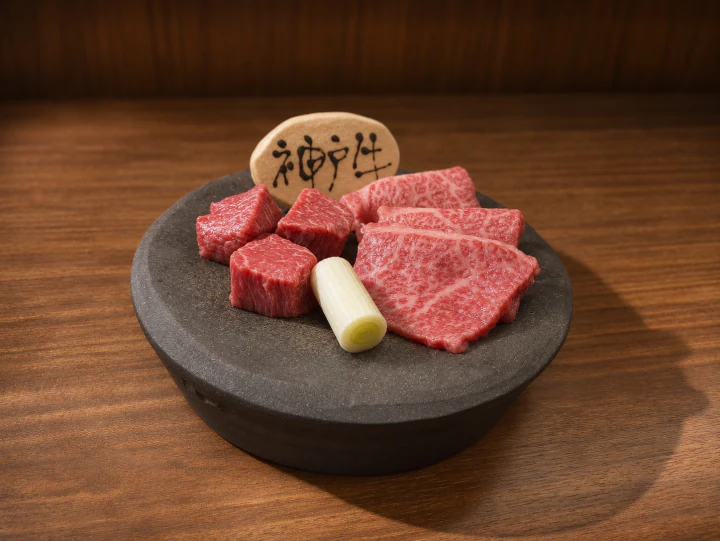
Start with what you enjoy: a tender lean cut, the sweetness of marbling, or a little resistance as you chew. The menu names below follow the Japanese cut map. Kobe beef cuts, Hirai Farm selections and other yakiniku dishes each carry their own names on the menu.
Choose a number on the side view or a name below it to find the cut, its texture and dishes that use it.
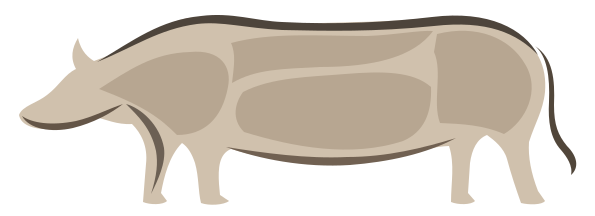
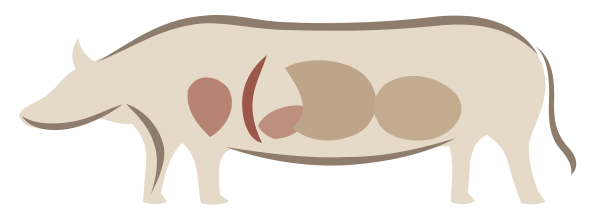
01Tongue and cheek · Tan and tsurami
Thinly sliced tongue has a clean snap; a thicker slice feels springier as you bite. Tsurami is the cheek muscle the animal uses to chew. Its fibres give it more bite and a deep savoury finish. Look for Hirai Farm tongue and cheek among the farm selections.
02Shoulder · Uwamisuji, kurimi and misuji
Around the shoulder blade, neighbouring muscles eat quite differently. Uwamisuji is lean with a light finish. Kurimi has a firmer bite, releasing more flavour as you chew. For a softer mouthful threaded with fine marbling, try misuji.
03Chuck and loin · Zabuton and rōsu
Zabuton comes from the chuck roll, where fine streaks of fat run through the meat. The loin along the back is tender and fragrant on the grill. Our thin-sliced yaki-shabu is a separate Japanese Black wagyu loin dish, served sukiyaki-style or with green seaweed broth and grated yam.
04Tenderloin · Here and chateaubriand
Here is the Kansai name for tenderloin, a long muscle that runs inside the backbone and does little work. It stays soft and finely grained with little fat. Chateaubriand is the thick, evenly shaped centre of that same tenderloin.
05Belly · Uchi-harami, kainomi and furanku
Our Kobe beef uchi-harami is a springy cut from the inner belly. Kainomi comes from the belly near the tenderloin and is softer, with moderate fat. Furanku has a deeper beef flavour with a sweet edge of fat. Harami without “uchi” is the diaphragm, described separately below.
06Rump · Ranpu and ichibo
Ranpu comes from the loin end of the rump. Its fine grain and restrained marbling make the flavour of lean beef easy to pick out. The neighbouring rump cap, ichibo, brings more fat into the bite. Choose the pair if you want to taste that difference side by side.
07Upper hind leg · Hiuchi
Hiuchi, also called tomo-sankaku, is part of the round near the top of the hind leg. Fine threads of fat run through lean beef. It is a good choice if you like the flavour of a lean cut but would welcome a little more sweetness.
08Oxtail · Tēru
Muscle and connective tissue wrap closely around the bones of the tail. We use their savoury broth in Grandpa’s oxtail soup, in ramen, and in a ginger-thickened sauce over rice. The soup lets you taste the broth on its own.
09Diaphragm · Harami
Harami is the diaphragm, the muscle between the chest and belly. The fibres separate easily but hold a little spring, with a deep beefy taste. At dinner you’ll find both our classic harami and a separately listed Hirai Farm harami.
10Heart · Hāto
Also called hatsu, heart is a lean muscle with a clean bite. Try alternating a piece with the richer small intestine to feel just how different two offal cuts can be.
11Liver · Rebā
Liver has a close, smooth texture and a pronounced flavour of its own. On the dinner menu you’ll find Hirai Farm’s Kami Liver and a separate grilled liver selection.
12Tripe · Mino, senmai and akasen
Mino comes from the first stomach and is thick and springy. Senmai, from the third, has many thin leaves with a delicate crunch. Akasen, from the fourth, pairs a ridged bite with a richer layer of fat.
13Small and large intestine
The small intestine has a soft, yielding texture and sweet fat. The large intestine is thicker and chewier. A mixed offal platter is another way to discover which textures you enjoy.