
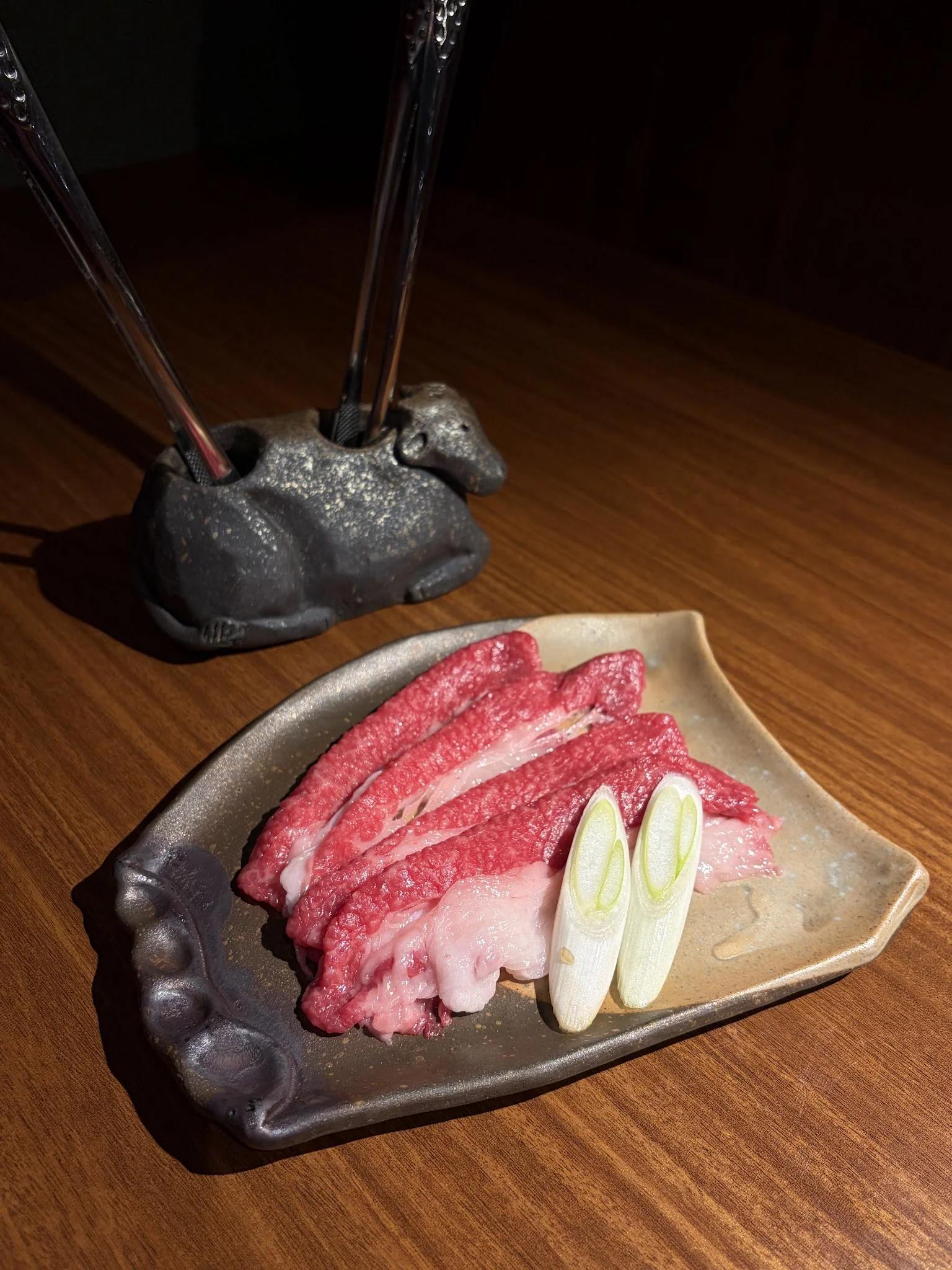
Karubi points to a region; akami describes meat
Karubi is a word of Korean origin associated with the ribs and belly. In a yakiniku restaurant it can be served off the bone, with red meat and fat in distinct layers. Akami means lean meat and can come from several places, including the hind leg and forequarter; a lean slice can still have fine marbling.
Look at the same two plates in three ways
Look for white threads within the red and thicker seams at the edge, then view the slice from the side to see its thickness. Finally notice whether the red forms one continuous face or a few muscles separated by seams. Even the centre and the end of pieces on the same plate can give two diners quite different impressions.
What changes when the meat is thinly sliced?
The menu offers Kobe beef karubi and lean beef in both standard and thin-sliced versions. Try two cuts at the same thickness to focus on the meat, or one cut in two thicknesses to explore how it feels as you bite through. Taste a piece on its own and another with rice: the sweetness of the fat may come across quite differently.