
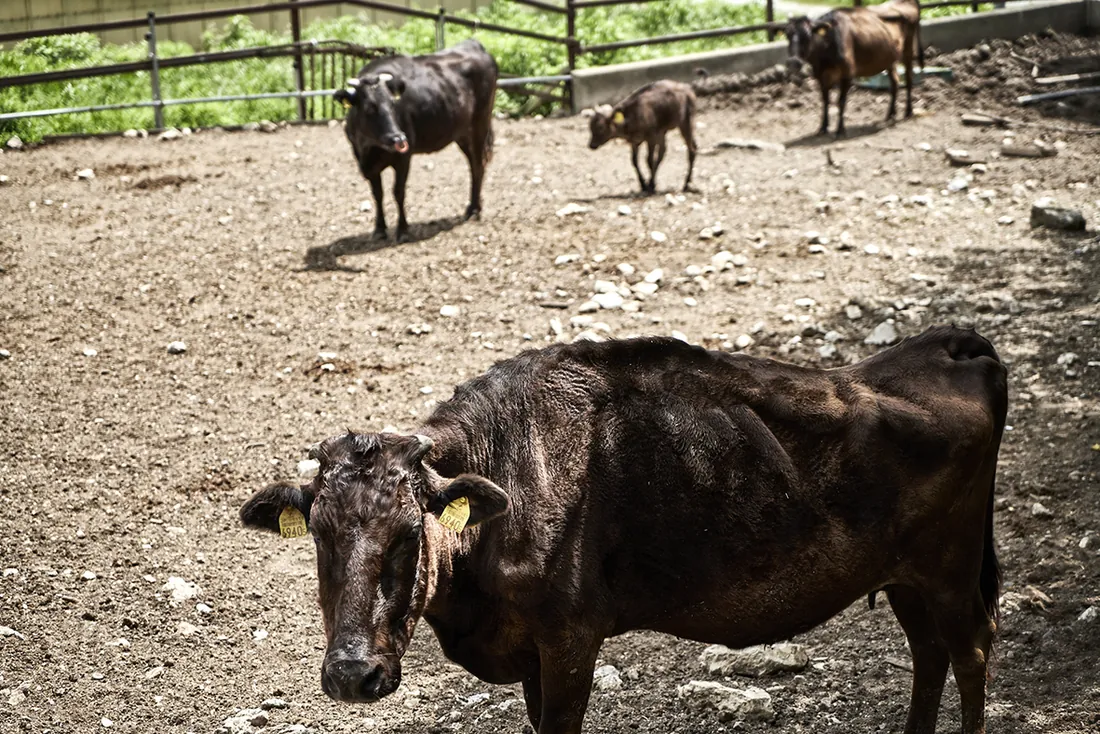
Cattle kept the terraces working
In Mikata, Tajima cattle ploughed terraces, grazed on mountain grass and produced calves that helped sustain farming households. A record of a calf market survives from 1849. A pedigree book preserves something a market price cannot: the relationship between one generation and the next.
From river valleys to a written register
Breeding once followed river valleys, and local lines known as tsuru-ushi had formed by the late Edo period. Municipal registers began taking shape around 1897; JA Tajima dates the completion of the ledger to 1903. Continuing to breed cattle born within Mikata helped preserve a distinct lineage within the wider Japanese Black population.
What the figure 99.9% means
JA Tajima cites a 2012 survey in which 99.9% of Japan’s Japanese Black cattle had the sire Tajiri in their ancestry. That is a count of descendants, not the percentage of their DNA from one bull, and ancestry alone does not confer Kobe certification. Mikata’s traditional cattle-rearing system earned Japanese agricultural heritage recognition in 2019 and global recognition in 2023.