
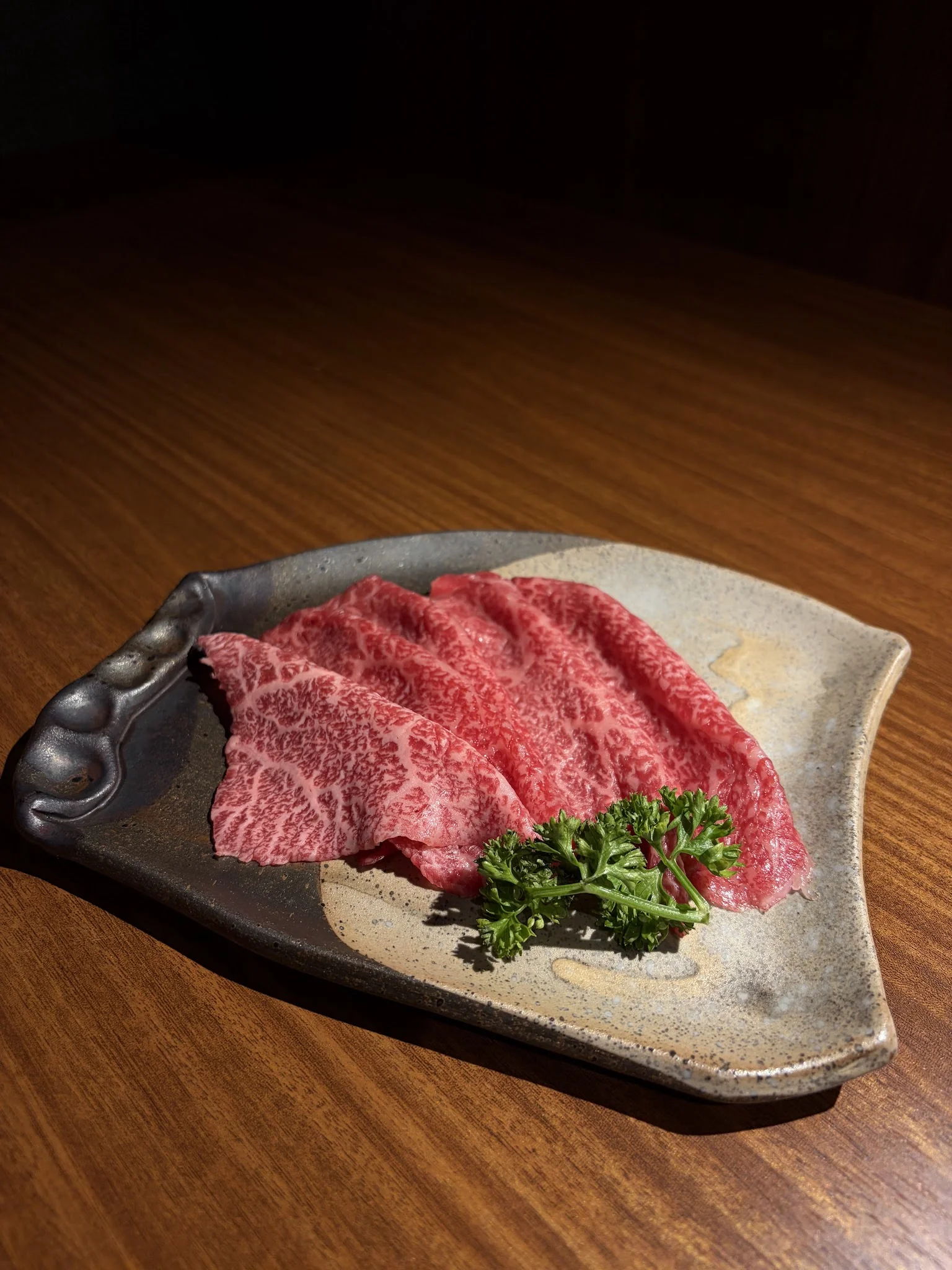
What you smell before the first bite
A lean slice can smell wonderfully toasted even when there is little white fat in sight. As its surface heats, amino acids and sugars take part in reactions that create new aromas. A slice simmered in broth cooks in a wetter setting, so it gives the nose a different experience from the same meat on a grill.
The sweetness you smell
When someone calls wagyu “sweet”, they may mean the scent of the warm fat rather than a sugary taste on the tongue. Researchers have linked a family of compounds called lactones with characteristic wagyu aromas. Sauce adds another layer. Seasoning heated with the meat develops a roasted aroma, while a little sauce added afterwards retains more of its original scent.
Compare two moments, then two cuts
Notice the aroma when you lift a fully cooked piece from the grill, then again as you finish chewing. In the second moment warm aromas reach your nose from the back of your mouth. Try this with Kobe beef karubi and lean beef. Which do you remember better, the first toasted note or the beefy aroma that lingers?