
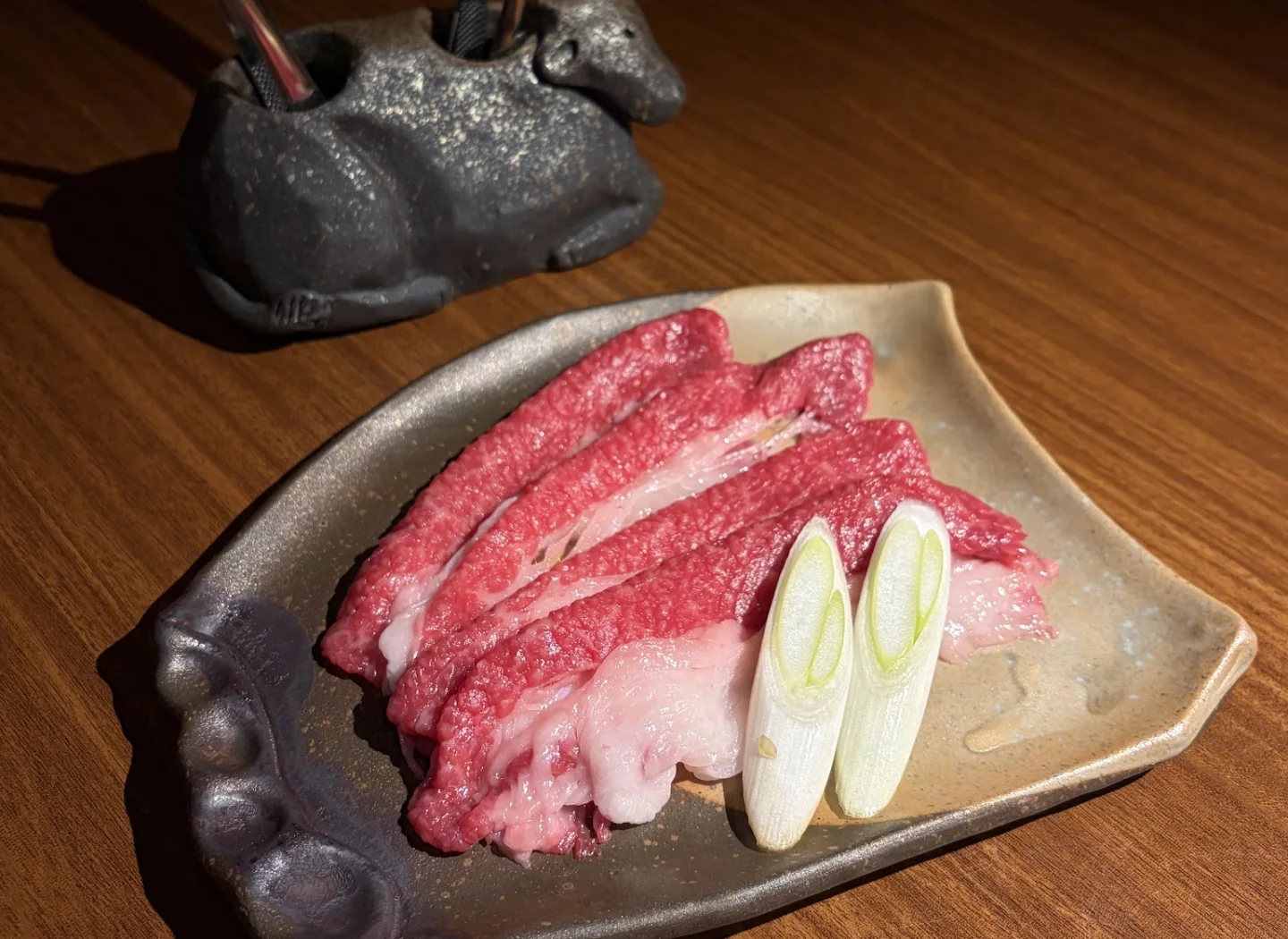
How cooking became part of the meal
At a yakiniku table, each diner can put down a slice, chat while it cooks, and decide what goes on next. In postwar Japan, Korean residents who ran restaurants helped shape this way of eating. Their contribution is there in the kimchi and the names on the menu as much as in the meat. The food shops and restaurants of Osaka’s Ikuno district still show that wider setting.
One restaurant’s dates, and the path of the smoke
Osaka’s Shokudoen records its opening in 1946, an appearance at Expo ’70 and the installation of a smokeless roaster in 1972. Those dates describe one restaurant. The equipment maker Shinpo dates its commercial launch to around 1979–80. Some systems draw smoke into an overhead hood, others pull it down into the table. Either way, a dining room with fire at every table needs a route for the smoke.
Why the table travelled
Japan’s yakiniku association points to the spread of smokeless grills and the liberalisation of beef imports in 1991 as part of the background to the growth of yakiniku restaurants. Restaurant operators formed their national association the following year. Order a plate of beef, pass the kimchi and discuss noodles while the next piece cooks: that familiar rhythm has a history of migration, restaurant craft and equipment behind it.