
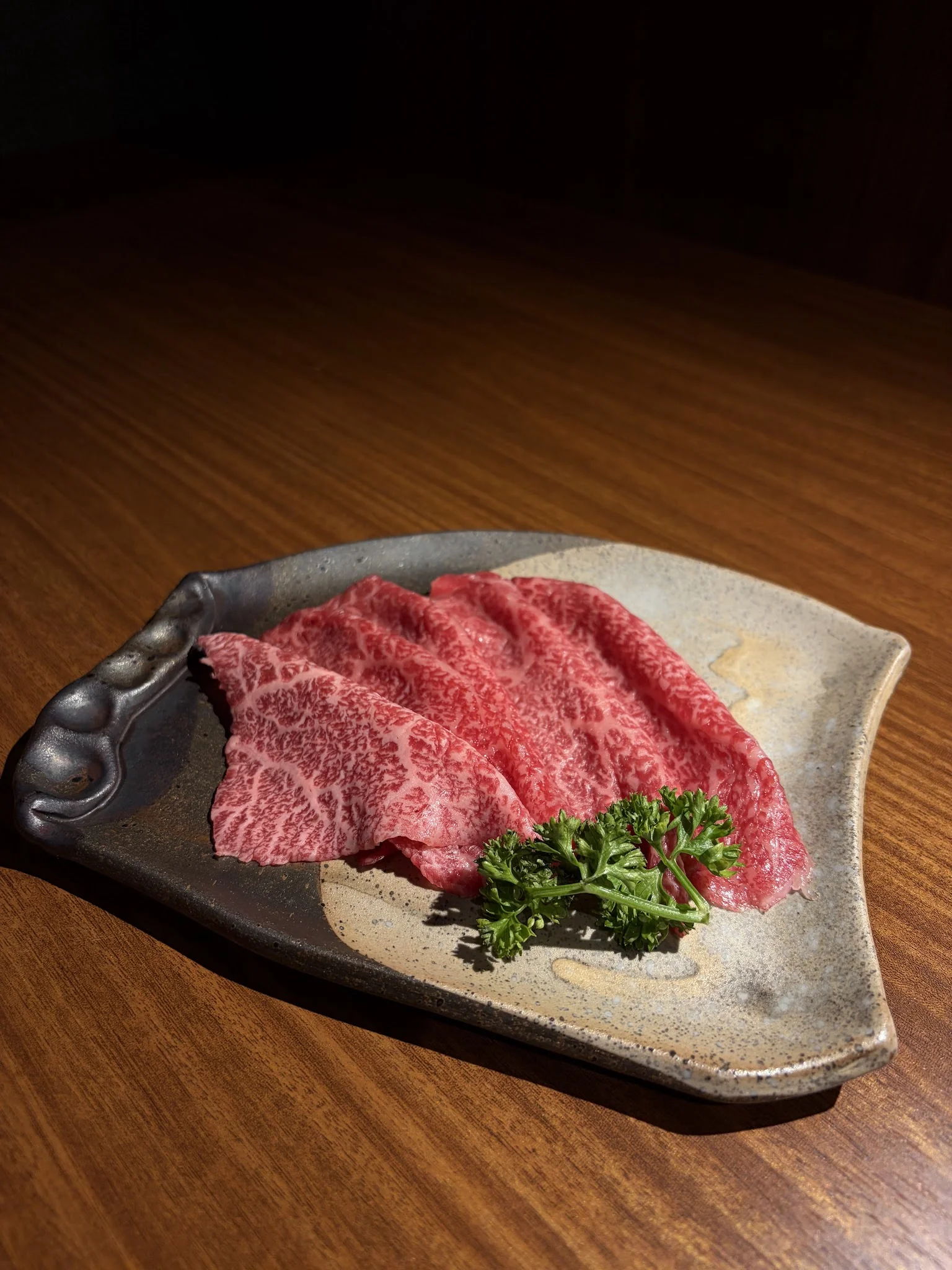
Reading the white lines
A slice of beef is a cross-section through bundles of muscle fibres. A fine white streak may be fat running inside the muscle, called sashi in Japanese, or the connective tissue that wraps and supports the fibres. The angle of the knife changes the pattern, and light bouncing off the surface can make it harder to tell which is which.
What changes on the grill
Marbling distributes fat through a mouthful, while a strip of fat along the edge can be eaten separately. Connective tissue contains collagen and contributes to the resistance you feel as you chew. Grilling changes the muscle and the spaces between its fibres. A brief turn on the grill also produces a different texture from a long, moist braise.
Finding the texture you like
Marbling is only one part of Japanese carcass grading, alongside traits such as colour, firmness and texture. Order Kobe beef karubi and a lean cut together and notice when each gives way to your teeth. Does it part at the first bite, or do the fibres loosen as you chew? That is a more useful clue to your next order than trying to read a grade from a photograph.